


When does electronic invoicing become mandatory?
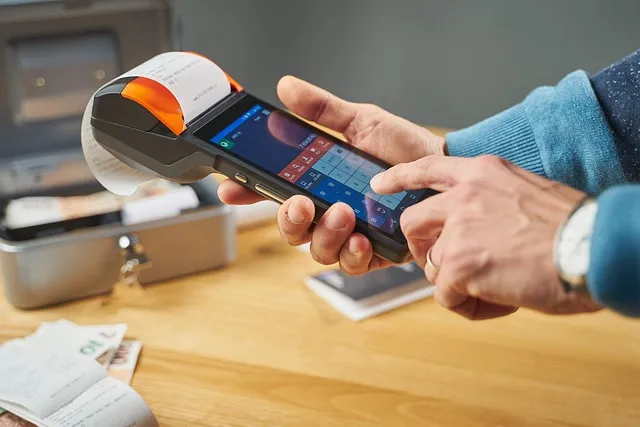
Electronic invoicing is simply the digitalization of the invoices that companies or self-employed workers issue to be paid for the goods supplied or services rendered. An e-invoice, like a paper invoice, therefore serves to support certain financial transactions. Until now, electronic invoicing was optional, but it is going to become mandatory. Article 12 of the new Business Creation and Growth Law (Ley Crea y Crece) amends Article 2 bis of the Law on Measures to Promote the Information Society, so that section 1 of that article now reads: “All businesses and professionals must issue, send, and receive e-invoices in their commercial relations with other businesses and professionals. The recipient and the issuer of e-invoices must provide information on the status of the invoice.” When is electronic invoicing mandatory? The Business Creation and Growth Law sets a period of 6 months from the publication of the law to establish the requirements and adopt the implementing regulations. We will have to wait to find out exactly what details will have to be included in invoices. Once the implementing regulations have been published: • Companies with annual revenue exceeding €8 million will have 1 year from the publication of the Business Creation and Growth Law to use electronic invoicing in their business processes. • All other companies, with revenue below €8 million, will have 2 years to adapt to this new obligation. In Spain, self-employed workers and businesses are required to issue e-invoices only when they provide services to public authorities. These invoices are sent through the FACeB2B electronic platform provided by the Ministry of Economic Affairs and Digital Transformation. This platform also offers services that allow private companies to send invoices electronically in their B2B relations, that is, with other private companies. How to validate an e-invoice The Regulation provides that, in particular, the authenticity of the origin and the integrity of the content of e-invoices are guaranteed by the following means: • By means of an advanced electronic signature. • Through electronic data interchange (EDI), as defined in Article 2 of Annex I to Commission Recommendation 94/820/EC of October 19, 1994. This consists of the structured transmission of data, by electronic means, between organizations. • By other means that have been notified to the Spanish Tax Agency (AEAT) before they are used and that the AEAT has validated. So, although it is not mandatory for an e-invoice to be electronically signed, our advice is that you sign it so that you can prove its validity, should the need arise. Requirements for e-invoices E-invoices must be issued through technology solutions and platforms provided by specialized companies. Among other things, these solutions must guarantee interconnection and unalterability, as well as provide information on the status of invoices and allow them to be downloaded, copied, or printed. It will no longer be enough to send them as PDFs by email. • They must, in all cases, comply with the specific invoicing regulations. • Both the recipient and the issuer of the invoices must report on the status of the invoices. • Recipients may request copies of the e-invoices for a period of 4 years from their issuance without incurring additional costs. • The recipient of the invoice may not require the issuer to use a predetermined electronic invoicing solution, platform, or service provider. Requirements for electronic invoicing solutions and platforms • The technology solutions and platforms offered by electronic invoicing service providers to businesses and professionals must guarantee their interconnection and interoperability free of charge. • The issuing and receiving companies’ own electronic invoicing solutions and platforms must meet the same criteria of free interconnection and interoperability with all other electronic invoicing solutions. • The computer or electronic systems and programs that manage invoicing processes and store e-invoices must comply with the requirements referred to in Article 29.2.j) of the General Tax Law (LGT) and its implementing regulations; that is, they must guarantee the integrity, preservation, accessibility, legibility, traceability, and unalterability of the records, without interpolations, omissions, or alterations that are not duly recorded in the systems themselves. Penalties for not having electronic invoicing software Companies and self-employed workers that do not have electronic invoicing software would be committing an administrative offense. This offense could be punished with a fine of up to €10,000. The amount of the penalties would be determined by the number of persons affected by the offense or the continuity or persistence of the offending conduct. It will be for the Secretary of State for Digitalization and Artificial Intelligence to impose the penalty.
Keep reading

Annual accounts: what they are and how they are filed
If you are a business owner, have a company, and are involved in business management, you will know that the financial year does not end…

Invoices and receipts: how do they differ?
Although at first glance they may seem similar, issuing an invoice is not the same as issuing a receipt. In fact, if you carry out…

What is a company's shareholders' equity?
Every company needs to know the resources it has available for its own organization. In other words, to make the soundest financial decisions. It must…
Explore the blog
Categories
Recent posts

Royal Decree-Laws 28/2026 and 29/2026 and the new regime for residential leases (II): tax measures
Royal Decree-Laws 28/2026 and 29/2026 and the new residential lease regime (I): lease term, evictions, and transfers

Shareholder exit through a capital reduction: two routes to channel liquidity and their taxation

Spanish tax authorities reassess retirement pensions and pension plan withdrawals of Spaniards under Portugal’s Non-Habitual Resident regime

The Spanish Tax Agency reverses a change in position applied de facto: U.S. entities may recover input VAT incurred in Spain by submitting an IRS certificate and a Resale Certificate
