


New package of measures to support the liquidity and solvency of self-employed workers and businesses

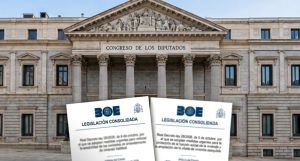
Royal Decree-Law 34/2020 on urgent measures to support the liquidity and solvency of businesses and self-employed workers has been published. The Government has stepped in to try to shore up the liquidity and solvency of Spanish companies in the face of a second wave of coronavirus. Among other things, the new package makes State-guaranteed loans more flexible, extends the insolvency moratorium, shields strategic sectors against foreign investment, and introduces new aid and tax facilities.
There are currently two financing lines of the Official Credit Institute (ICO) in force that both companies and professionals can access to address the economic and liquidity problems arising from the Covid-19 crisis: one of €100 billion and another of €40 billion aimed at funding investments. Applications under these financing lines could be submitted until December 31, 2020, a deadline that the Government has now extended to June 30, 2021.
Likewise, the repayment period for these ICO loans is extended from the current three years to eight years, and the grace period is also extended from twelve months to twenty-four months.
In addition, the Government has stated that banks, which must respond to extension requests within a maximum of 30 days, may not increase the interest rate without justification or require the purchase of tied products.
Finally, in order to shorten the time needed to grant these loans, the ICO will be empowered to request information on customers receiving guaranteed financing in order to check what positions they hold at other banks. A 50% reduction in notarial and registry fees for recording the extension transactions is also provided for, and the ICO is authorized to contact the Bank of Spain’s Central Credit Register (CIRBE) directly in order to speed up the verification of the defaults reported to it by financial institutions.
Requirements to apply for an extension of the grace period or repayment period of ICO loans
Only those who meet the original requirements for the granting of an ICO loan may benefit from the extension of both the grace periods and the repayment periods of these loans. They must have their registered office in Spain, have been affected by the economic effects of COVID-19, and meet the following conditions:
– They must not appear as being in default when the files of the Bank of Spain’s Central Credit Register (CIRBE) are consulted as of December 31, 2019.
– They must not have been subject to insolvency proceedings (concurso) as of March 17, 2020, either because they had filed a petition for a declaration of insolvency or because the circumstances referred to in Article 2.4 of Law 22/2003, of July 9, for insolvency to be petitioned by their creditors were met.
– To show that the drop in revenue is due to the economic havoc caused by the Covid-19 pandemic, they must prove that as of December 31, 2019, they were not in difficulty, in accordance with the criteria set out in Article 2(18) of Commission Regulation No 651/2018, of June 17, 2014, declaring certain categories of aid compatible with the internal market.
– Furthermore, the loans and transactions must have been executed or renewed on or after March 18, 2020, and the guaranteed financing may not be used for the cancellation or early repayment of pre-existing debts.
In addition, the rules require that banks not make unjustified increases in interest rates or require the purchase of a tied product.
Shielding against foreign investment
Another of the measures in the approved plan is the extension until June 30 of the shield against foreign investment that applies to strategic sectors. Thus, until then, acquiring more than 10% of a Spanish listed company, or of unlisted companies where the transaction exceeds €500 million, will require the approval of the Spanish Government.
In parallel, through the Spanish Export Credit Insurance Company (Compañía Española de Seguros de Crédito a la Exportación, CESCE), the Ministry of Economic Affairs has created an extraordinary working capital coverage line of €1 billion, has increased the guarantee line for SMEs and unlisted companies by €100 million, and has created another coverage line for listed companies of €1 billion, until December 2021.
Insolvency moratorium
Another pillar of the plan is the extension, from October 30, 2020, to March 14, 2021, of the suspension of voluntary and creditor-filed insolvency proceedings, as regards both the petitions filed by debtors and creditors, respectively, and their admission by the court.
In parallel, the legislation also extends the temporal scope of the measures under which the court will not admit for processing petitions filed by creditors for a declaration of breach of a composition agreement (convenio), or petitions for a declaration of breach of a refinancing agreement.
Finally, the legislation also raises from €500 million to €1 billion the market capitalization threshold above which companies must move from the former Alternative Stock Market (MAB) to the continuous market, in order to prevent the stricter disclosure requirements imposed by the latter trading floor from ultimately discouraging companies from continuing to grow.
Keep reading

Extension of the extraordinary benefit for cessation of activity
On January 27, Royal Decree-Law 2/2021, of January 26, on strengthening and consolidating social measures in defense of employment, was published. It regulates the new…

Moratorium on the payment of social security contributions
The 2021 General State Budget (Presupuestos Generales del Estado) includes, among other labor law developments, the possibility for companies and self-employed workers to apply, by…

Extension of temporary layoff schemes (ERTEs) until May 31 approved
Royal Decree-Law 2/2021, of January 26, on the strengthening and consolidation of social measures in defense of employment.
Explore the blog
Categories
Recent posts
Royal Decree-Laws 28/2026 and 29/2026 and the new regime for residential leases (II): tax measures
Royal Decree-Laws 28/2026 and 29/2026 and the new residential lease regime (I): lease term, evictions, and transfers

Shareholder exit through a capital reduction: two routes to channel liquidity and their taxation

Spanish tax authorities reassess retirement pensions and pension plan withdrawals of Spaniards under Portugal’s Non-Habitual Resident regime

The Spanish Tax Agency reverses a change in position applied de facto: U.S. entities may recover input VAT incurred in Spain by submitting an IRS certificate and a Resale Certificate
