


Extension of temporary layoff schemes (ERTE) and benefits for the self-employed approved

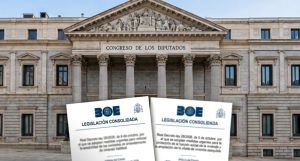
The Council of Ministers has approved the Royal Decree-Law on the defense of employment and economic reactivation and on the protection of self-employed workers, which includes the extension of the benefits of temporary layoff schemes (ERTE) until February 28, 2022.
During October, companies wishing to continue applying ERTEs in the following months will have to file a new ERTE application between October 1 and 15, which will be governed by the new framework in force from November 1. If they receive no response from the labor authority, the application will be deemed approved by administrative silence (silencio administrativo positivo). The approval decision will extend the ERTE until February 28, 2022.
For extended ERTEs and new ERTEs, the company must submit a list of the affected workers within 5 business days (from the date on which the decision or the notice to the labor authority takes effect) via the e-office (sede electrónica) of the Ministry of Labor, using the form annexed in the Official State Gazette (BOE).
Prohibitions and requirements
• Overtime and outsourcing are prohibited.
• Job retention. Companies that apply contribution exemptions will be bound by a new 6-month job retention period.
• The running of the term of temporary contracts and training contracts that have been affected by an ERTE is suspended.
• The distribution of dividends is prohibited, and access to this support is restricted for companies domiciled in tax havens.
Which ERTEs are extended?
The ERTEs that are automatically extended, provided that the aforementioned application is filed, are:
• Force majeure ERTEs
• Impediment ERTEs (Royal Decree-Law 24/2020)
• Impediment ERTEs (Royal Decree-Law 30/2020) or (Royal Decree-Law 2/2021).
• Limitation ERTEs (Royal Decree-Law 30/2020) and (Royal Decree-Law 2/2021).
• ERTEs on economic, technical, organizational, or production grounds (ETOP) (Royal Decree-Law 8/2020).
Training ERTE
Companies that provide training to people affected by this type of ERTE will be entitled to an increase in the credit for funding training activities, depending on their size:
• 1 to 9 workers: €160 per person.
• 10 to 49 workers: €240 per person.
• 50 or more people: €320 per person.
The training activities may be carried out through any of the types of training provided for in Law 30/2015, of September 9, regulating the vocational training for employment system in the workplace.
Which exemptions apply?
Contribution exemptions are extended until October 31 for ERTEs in force on September 30, at the same percentages they had applied in September.
Companies that provide training to those affected by the ERTE will be entitled to increase their exemptions. The deadline for carrying out the training activities is June 30, 2022. The exemptions will apply from November to February in respect of people affected by a suspension or a reduction in working hours.
The exemptions will depend on the size of the company and on the training activities:
• Companies with fewer than 10 workers: 80% exemption if they provide training and 50% if they do not.
• Companies with more than 10 workers: 80% exemption if they provide training and 40% in all other cases.
• Impediment ERTEs will have a 100% exemption from the employer’s contribution between November and February 28, 2021.
Protection of workers
The so-called ‘counter reset to zero’ (‘contador a cero’) is extended until December 31, 2022, so that the unemployment benefit time used up by a worker who has been on an ERTE since September 2020 will not count when a dismissal for any reason occurs after January 1, 2023.
An extraordinary unemployment benefit is also established for people with permanent seasonal contracts (contratos fijos-discontinuos). The ‘counter reset to zero’, which was not previously guaranteed for this group, is now guaranteed, and the amount of the benefit to be received by workers on an ERTE is maintained at 70% of the benefit calculation base (base reguladora) throughout the term of the extension.
Specific ERTE for the Canary Islands
A specific ERTE is being launched for companies affected by the eruption of the Cumbre Vieja volcano on the island of La Palma and throughout the Canary Islands.
Workers will be protected, and companies will benefit from exemptions of up to 100% of social security contributions where their activity is completely prevented and of up to 90% where their activity is limited.
Extension of the benefit for the self-employed
The benefits for self-employed workers affected by the crisis arising from COVID-19 are extended.
The extraordinary cessation-of-activity benefit (prestación extraordinaria de cese de actividad) for self-employed workers is maintained until January 31, 2021.
For this extraordinary benefit, a 75% drop in turnover will be required, and the income threshold will be raised to 75% of the current national minimum wage (SMI).
Phased exemptions are also maintained for self-employed workers who had been receiving any of the benefits up to September, which will be 90% in the first month, 75% in the second, 50% in the third, and 25% in the fourth month. The ordinary benefit remains as it has been until now.
Keep reading

Holding company management services to subsidiaries are not a single supply for VAT purposes: implications of the Högkullen judgment for Spanish groups
Judgment of the Court of Justice of the European Union (CJEU) of July 3, 2025 (Case C-808/23, Högkullen AB) The relationship between holding companies and…

The Supreme Court relaxes the employee requirement for rental companies in family groups: a step forward, with caveats
Supreme Court judgments (STS) 637/2026 of February 17 (appeal no. 1196/2024), 640/2026 of February 19 (appeal no. 1326/2024), and 874/2026 of February 20. _____________________________________________ One…

The EU General Court reinforces the right to deduct input VAT even where the invoice is received outside the accrual period
Judgment of the General Court of the European Union of February 11, 2026 (Case T-689/24) The recent judgment of the General Court of the European…
Explore the blog
Categories
Recent posts
Royal Decree-Laws 28/2026 and 29/2026 and the new regime for residential leases (II): tax measures
Royal Decree-Laws 28/2026 and 29/2026 and the new residential lease regime (I): lease term, evictions, and transfers

Shareholder exit through a capital reduction: two routes to channel liquidity and their taxation

Spanish tax authorities reassess retirement pensions and pension plan withdrawals of Spaniards under Portugal’s Non-Habitual Resident regime

The Spanish Tax Agency reverses a change in position applied de facto: U.S. entities may recover input VAT incurred in Spain by submitting an IRS certificate and a Resale Certificate
