


Electronic invoicing: this is the timeline for the new obligations.
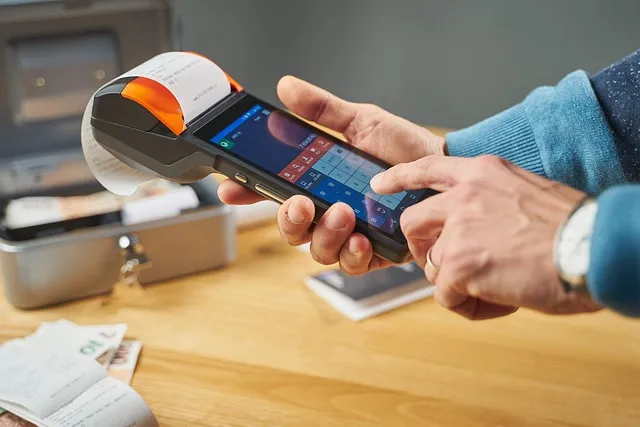
Self-employed workers will have one more year, specifically until 2026, to adapt to the electronic invoicing system, the final phase of which will be reporting the status of each invoice to the tax authorities. All of this assumes that the invoicing regulations that the Government must approve go ahead this year.
But everything depends on the invoicing regulations being approved by the Government this year.
Which self-employed workers will have to use electronic invoicing?
The Business Creation and Growth Law (Ley Crea y Crece) is clear, and the article refers to all companies and self-employed workers, without exception. This will apply to self-employed workers and business owners of every kind and description, regardless of their turnover.
However, it should be borne in mind that the obligation applies whenever the invoice is issued to another company or self-employed professional. In other words, this obligation does not apply to invoices issued to private individuals, such as the invoice of a self-employed professional who carries out plumbing work in a private home. In these cases, a paper invoice may be issued. Likewise, it does not apply to simplified invoices or to the receipts typically issued by retail establishments.
The Business Creation and Growth Law
According to the implementing regulations of the Business Creation and Growth Law, large companies must adapt to the new electronic invoicing system one year after the regulations enter into force.
If they were approved in 2023, this would be in 2024. And two years later (2025) for all other companies and self-employed workers.
However, the step of reporting invoice status to the tax authorities will be postponed by a further year for self-employed workers, according to the draft Royal Decree, which is still subject to possible amendments.
Self-employed workers will have one more year to report the status of each invoice.
The draft Royal Decree implementing Law 18/2022 (the Business Creation and Growth Law) is completing the public consultation process (audiencia pública) with the Spanish Tax Agency (AEAT).
It includes important aspects, such as the obligation to use electronic invoicing not only when the self-employed worker acts as supplier, but also when acting as customer and receiving the invoice.
Under the regulations, the timeframes for companies to adapt to the changes in electronic invoicing provided for its application one year after the regulations' entry into force for companies with turnover exceeding €8 million, and two years after it for all other companies and self-employed workers. With the change introduced, in principle, the implementation periods would be as follows if the regulations were approved this year:
• One year after the entry into force of the law (2024). For companies with annual turnover exceeding €8 million, mandatory electronic invoicing and reporting of invoice status.
• Two years after the entry into force (2025). For all other companies, with annual turnover below €8 million, and for self-employed workers, mandatory electronic invoicing. For all other companies with annual turnover below €8 million, mandatory reporting of invoice status.
• Three years after the entry into force (2026). Mandatory reporting of invoice status for self-employed workers.
In this regard, Article 8 of these regulations already set out the obligation to report invoice status (received, accepted, or paid) and established that the duty to report these statuses falls on the recipient. It is this scope of application that, in principle, is extended by one year for self-employed workers, who will thus have twelve more months to adapt to the application and reporting of these statuses. However, the draft is still being prepared and may change again before its approval in the coming months.
In this respect, self-employed workers who receive an electronic invoice are expected to report the various stages of the process that the invoice is in. These include whether the invoice has been accepted or contains an error, whether the customer has already paid part of it, or whether the customer has paid the full amount. They must also make their invoice entry point public. Thus, to facilitate the digital transition of self-employed workers, they will have one more year (approximately three years from publication in the Official State Gazette, BOE) to apply everything relating to invoice status.
Main penalties for failing to comply with electronic invoicing
To comply with the provisions of the Business Creation and Growth Law, all companies and self-employed workers must send invoices in electronic format and allow access to them for a period of four years. Failure to comply with these rules will be penalized as an administrative offense, with penalties ranging from a warning to fines of up to €10,000, depending on the type of offense.
Keep reading
Annual accounts: what they are and how they are filed
If you are a business owner, have a company, and are involved in business management, you will know that the financial year does not end…

How long must a company keep its documentation?
In running a business, it is essential to be clear about how long any type of company documentation (books, invoices, accounts, minutes, contracts…) must be…

Self-employed workers will be able to deduct meals with clients.
Self-employed workers can now deduct the cost of business meals with their clients. The Supreme Court has established case law with judgment 458/2021, on one…
Explore the blog
Categories
Recent posts
Royal Decree-Laws 28/2026 and 29/2026 and the new regime for residential leases (II): tax measures
Royal Decree-Laws 28/2026 and 29/2026 and the new residential lease regime (I): lease term, evictions, and transfers

Shareholder exit through a capital reduction: two routes to channel liquidity and their taxation

Spanish tax authorities reassess retirement pensions and pension plan withdrawals of Spaniards under Portugal’s Non-Habitual Resident regime

The Spanish Tax Agency reverses a change in position applied de facto: U.S. entities may recover input VAT incurred in Spain by submitting an IRS certificate and a Resale Certificate
